Inequality Scholar Spotlight
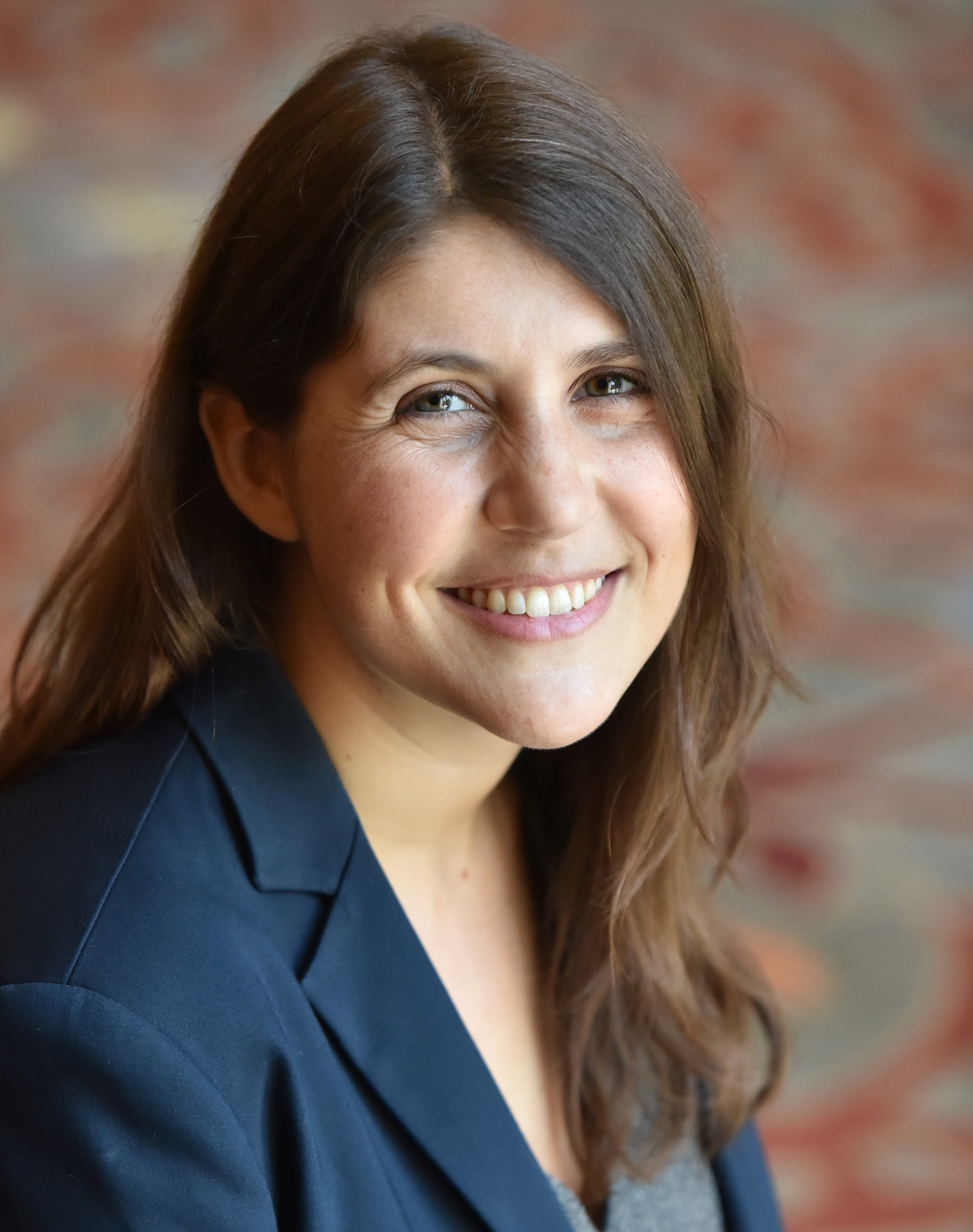
Featured scholar
Fabiana Silva
Assistant Professor of Public Policy · CID Faculty
Fabiana Silva’s research often begins with a question that sits at the intersection of sociology and public policy:
How do social categories become consequential?
Growing up in Uruguay, Silva often heard family conversations about economic conditions and why some countries were more prosperous than others. After she moved to the United States as a teenager, her focus shifted toward distributional questions within a wealthier country: Who benefits, who is excluded, and how do institutions reproduce inequality?
Her undergraduate thesis at Harvard, based on interviews with Latino immigrants in Los Angeles, including garment workers, day laborers, and domestic workers, drew her toward sociology’s attention to how people interpret their circumstances and make decisions.
“I didn’t realize how many assumptions I was making until I started talking to people. They fell apart pretty quickly.”
Silva went on to earn her doctorate in sociology from the University of California, Berkeley, where a workshop in mathematical and analytical sociology connected her with graduate students who shared her interest in causal questions and her sense of what makes evidence convincing. Her current research reflects that combination of broad sociological questions and empirical specificity.
How do employers value and interpret referrals?
Most people find jobs through personal contacts, and because networks are racially segregated, those contacts are typically of the same race as the jobseeker. Research has therefore focused on access, finding that Black jobseekers are less likely to have someone well-positioned to vouch for them. Silva wanted to know whether referrals, once obtained, might work in Black jobseekers’ favor by giving employers individualized information that cuts against negative stereotypes.
“I was hopeful. Black jobseekers have a harder time getting a referral. But I thought the referrals they do get might count for more,” Silva said.
That is not what she found. In her experiment, White employers strongly rewarded White applicants’ same-race referrals but dismissed those of Black applicants, even when the employer showed little implicit bias. Black applicants benefited from referrals only when the employee vouching for them was White and the employer had low implicit bias.
A follow-up study helps explain why. Many White employers believe that Black, Latino, and Asian employees prefer to help their own group members rather than recommend the strongest candidate—a belief they rarely hold about White employees. A referral understood as in-group loyalty tells an employer little about whether the applicant is a good fit for the job. Getting a referral matters, but so does what an employer makes of it once you have one.
How do Americans racially classify one another?
Another strand of Silva’s work examines “observed race,” or how people are racially classified by others rather than how they identify themselves. The distinction matters because discrimination occurs through perception, yet nearly all the data used to measure inequality and enforce civil rights law relies on self-identification.
Federal statistics have long treated “Hispanic” as an ethnic group that can be of any race, so that a person could be ethnically Hispanic and also racially White, or ethnically Hispanic and racially Black. Silva finds many Americans reject this view: almost half of observers did not classify someone as Hispanic—despite speaking Spanish and having a Spanish name—if that person looked distinctively White or Black.
The reverse happened as well, though less often. Appearance was the strongest cue in whether observers classified someone as White or Black. But name and language cues associated with Hispanic origins lowered the likelihood of being classified as White or Black, even for people whose appearances were perceived as distinctively White or Black.
Silva’s broader argument is that the Hispanic category, often described as elusive, has become meaningful and widely understood: Americans agree about classifying a diverse range of people as Hispanic. In becoming established, it appears to have reshaped understandings of Whiteness and Blackness.
Silva is now bringing together her work on classification with her work on discrimination, testing directly whether markers like a Spanish surname change not only how an applicant is racially seen but also how they are treated.
The trouble with civil rights appeals
While Silva’s first two lines of work examine how inequality gets produced, the third examines social movements’ efforts to build public support for undoing it.
Movements have to convince people that a problem is unjust and worth acting on, and in the United States many reach for the language and imagery of the Civil Rights Movement to make that case. Silva and her collaborators, Irene Bloemraad and Kim Voss, found good reason for the strategy’s widespread appeal: Americans across the political spectrum think highly of civil rights and broadly agree about what it means.
And yet the strategy backfires. Describing contemporary problems as civil rights violations consistently reduced support for government intervention—across different issues, different groups of beneficiaries, and different audiences. Liberals and conservatives, Black, White, and Latino respondents all responded negatively.
The problem, Silva suspects, is that the strategy invites a comparison. Say “civil rights” and people think of the idealized Civil Rights Movement of the 1960s—and measured against that, today’s problems seem less pressing and today’s movements less impressive.
Silva is often surprised by her findings, which she says is part of the point. Experiments, she said, are useful because they can test widely held assumptions and reveal when expected mechanisms do not operate as predicted. Her location in a public policy school also shapes how she thinks about the implications of her research: public policy students and colleagues push her to consider not only why inequality persists, but also what might be done about it.
“So far I’ve mostly been documenting what doesn’t work. Hopefully I’ll next figure out what does.”
This story is featured in the Stone Center’s 2025–26 annual report.