Inequality Scholar Spotlight
Featured scholar
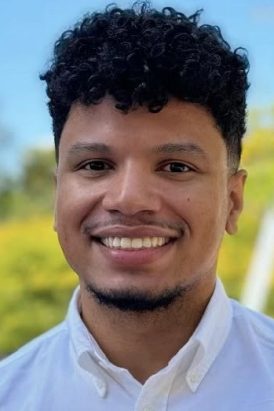
Alexander Adames
Assistant Professor of Sociology · CID Faculty
Alexander Adames, an assistant professor of sociology, studies the causes and consequences of economic stratification in the United States. His research examines wealth, income, and labor market outcomes over the life course and across generations. He joined the Stone Center for Inequality Dynamics as a faculty associate in July 2026.
How do family assets shape college completion?
In one project, Adames examines whether parental homeownership improves children’s educational outcomes, a long-standing question in research on mobility and inequality. Some theories argue that homeownership can benefit children by increasing family wealth, encouraging savings, and making parents more invested in their communities.
Adames said his work suggests that researchers should pay closer attention to liquid assets, such as bank accounts, brokerage accounts, and retirement savings, which families can more easily use in times of need.
In a paper currently under review, Adames and a co-author evaluate whether children’s college completion is more strongly associated with parents’ homeownership or parents’ liquid-asset poverty. Liquid asset poverty refers to having liquid assets below one-quarter of the poverty line.
The study found that the apparent benefit of parental homeownership disappears after accounting for background characteristics, he explained. By contrast, the negative association between parental liquid-asset poverty and children’s college completion remains.
“The findings suggest that parental asset poverty hurts children’s college completion,” Adames said.
The project is part of Adames’ broader research agenda on economic inequality, wealth and mobility. He said wealth is important because it reflects more than income.
“Wealth becomes an indicator of a person’s financial security,” Adames said. “It is the pool of capital people have to protect themselves.”
Who participates in the stock market?
Adames is also developing research on racial differences in stock market participation. He said the question matters because households increasingly bear responsibility for retirement security and financial risk. While homeownership remains a major source of wealth for many families, liquid assets can be more readily used during economic hardship.
He said existing research often focuses on financial literacy or risk aversion, but those explanations raise further questions.
“Why are some people more informed about financial markets than others?” Adames said.
How do earnings and education impact romantic prospects in online dating?
In a separate line of research, Adames studies romantic desirability in online dating. He and collaborators have conducted an experiment using fictional dating profiles to examine how educational prestige, for-profit college attendance, and gendered expectations around earnings shape dating preferences.
The experiment asked participants how likely they would be to “swipe right” on profiles with randomized characteristics. The design allowed researchers to estimate the causal effect of those characteristics on romantic interest.
Adames said the project connects to broader questions about inequality because relationships and family formation are shaped by education, class, and social expectations.
The path to sociology
Adames said his interest in sociology began during his first semester of college, when he took a writing course on social class in America. The course helped him make sense of class differences he had observed growing up in New York City and working as an intern at the American Museum of Natural History.
“Taking sociology classes started to inform what I had been seeing,” Adames said. “Talking and writing about inequality seemed really appealing to me.”
Adames earned his doctorate in sociology from the University of Pennsylvania, where he was an Institute of Education Sciences predoctoral fellow. He also earned a master’s degree in statistics from the Wharton School. He received his bachelor’s degree in sociology from the University of Virginia.
Adames said research allows him to study questions that have long interested him while using data to examine patterns in social life.
“I liked thinking about inequality and looking at graphs and making sense of data,” he said.
This story is featured in the Stone Center’s 2025–26 annual report.