
Wealth and Mobility Study

Building a New Wealth Data Infrastructure
The United States has the highest wealth inequality among developed countries, and it continues to rise. Wealth inequality has far-reaching effects on economic security, opportunities for the next generation, human capital formation, and the quality of the democratic process. However, understanding exactly how wealth is distributed and transmitted across generations is hampered by serious gaps in our national data infrastructure.
Learn more
The Stone Center for Inequality Dynamics is working to address these gaps in partnership with the Internal Revenue Service (IRS). The Wealth and Mobility study (WAM) is a project funded by a multiyear grant from the Gates Foundation.
“We are building a transformative data infrastructure on wealth and income,” said Pablo Mitnik, the project’s director. “Drawing on IRS microdata linked to other administrative sources, such as property and mortgage records, we are currently finalizing the construction of a comprehensive set of measures of wealth and income for the entire U.S. population. We will next move to the production of a massive set of estimates of income and wealth levels, inequality, spatial segregation, and intergenerational mobility.”
“We have a very limited understanding of geographic differences in the distribution and transmission of wealth within the U.S.,” continued Fabian Pfeffer, co-director of the project. “Our work will provide estimates not only at the national level but also across subnational geographies, including states, counties, and Census tracts, which will allow other researchers, policy-makers, and community members to assess the wealth situation of communities across the United States. This will significantly expand our understanding of local variation in inequality and mobility, which so far has been mostly derived from income-based comparisons,” said Pfeffer.
An interdisciplinary team of researchers and IRS research partners is behind the project. In addition to Mitnik and Pfeffer, the team features other CID faculty and students such as Co-Investigators Joe LaBriola and Asher Dvir-Djerassi, as well as collaborators Victoria Bryant (IRS) and Robert Manduca (U-M Sociology).
“We expect the transformative data infrastructure we are developing will reveal patterns that were previously impossible to observe, providing a powerful tool to analyze and address the geography of economic advantage and disadvantage in the country,” said Mitnik.
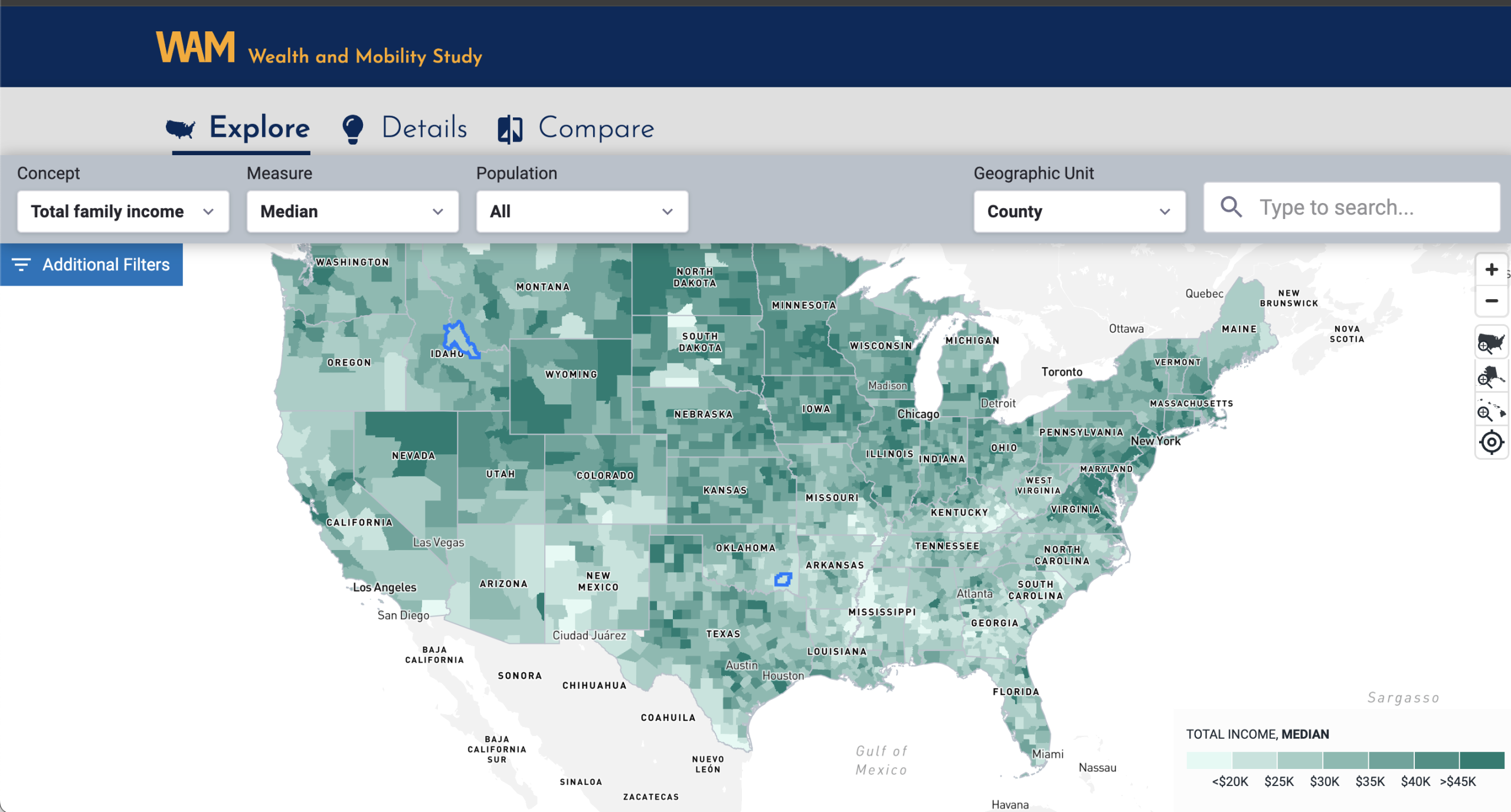
The Data Infrastructure WAM is Building

Wealth & income measures
- Levels
- Inequality
- Spatial segregation
- Intergenerational mobility
Geographic coverage
- Country
- States
- Core-based statistical areas
- Commuting zones
- Counties
- Congressional districts
- Major cities
- Census tracts
“The creation and analysis of U.S. tax-based datasets—especially those linking records across generations—has revolutionized the study of income inequality and mobility,” pointed out Mitnik, “by making it possible to examine variation even across very small subpopulations, including those defined by fine-grained geographic areas.”
“We will build on this scientific breakthrough to expand our understanding of the differences between income and wealth, particularly in terms of levels and patterns of inequality and the transmission of advantages across generations,” added Pfeffer.
While most prior efforts to produce wealth measures from U.S. tax records have focused on the very wealthy, this study seeks to measure wealth at all levels. Housing wealth is central to this task as it constitutes the main asset held by most U.S. households. “By using estimates of home values and mortgage debt from a real estate data provider to compute our measures of wealth, we will be able to provide a more comprehensive picture of the distribution of wealth across the full population,” noted LaBriola.
The resulting data will help researchers analyze place-based determinants of wealth—especially how local housing markets, property tax regimes, zoning, credit conditions, and neighborhood change shape wealth accumulation and disparities.
“We expect large variation in wealth across the U.S. and hope that the data will prompt a broad set of researchers to investigate entirely new aspects of the geography of inequality in the country,” said Manduca.
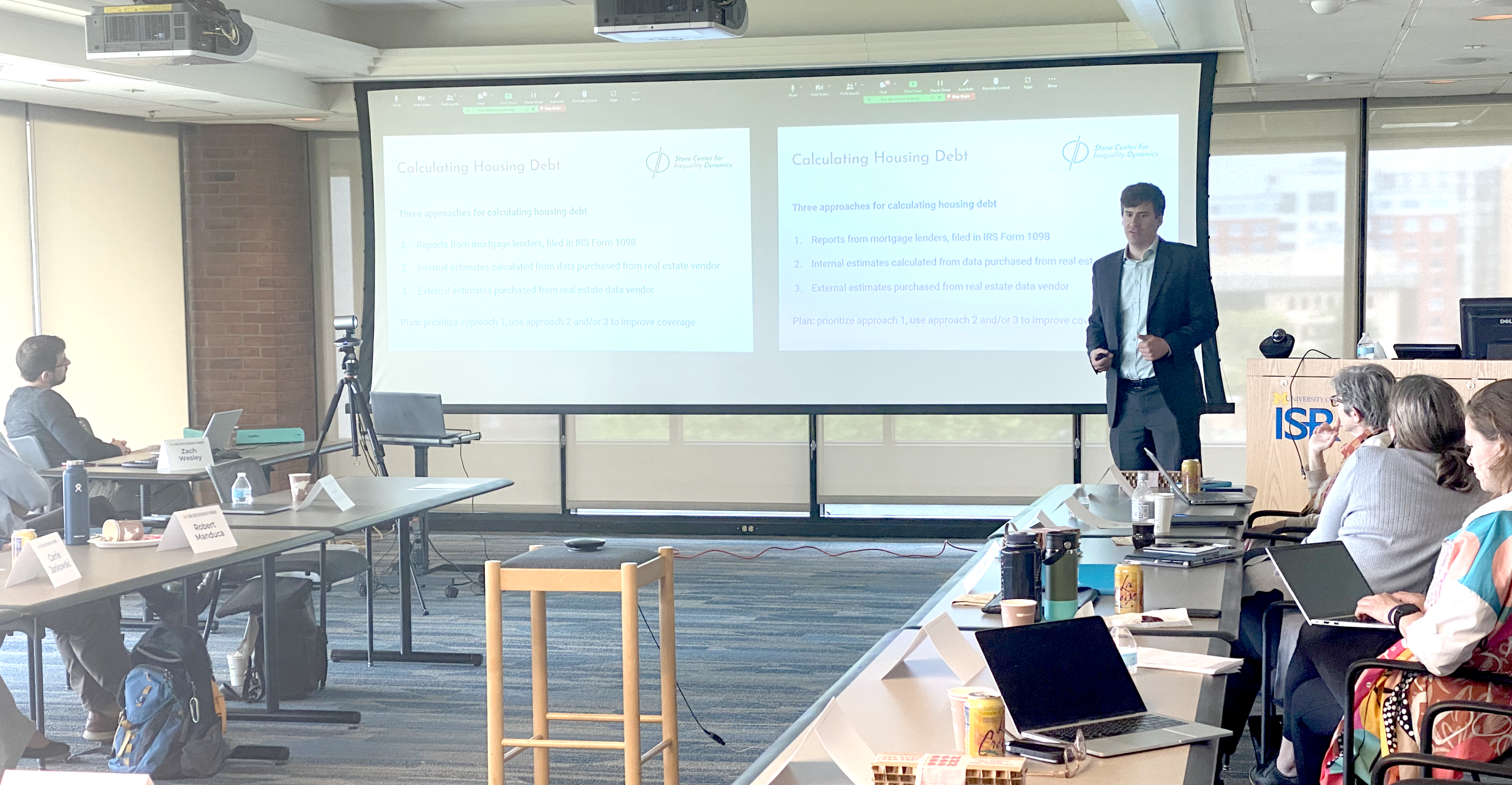
Joe LaBriola presenting an update on housing wealth measurement at the 2023 WAM Advisory Board Meeting.
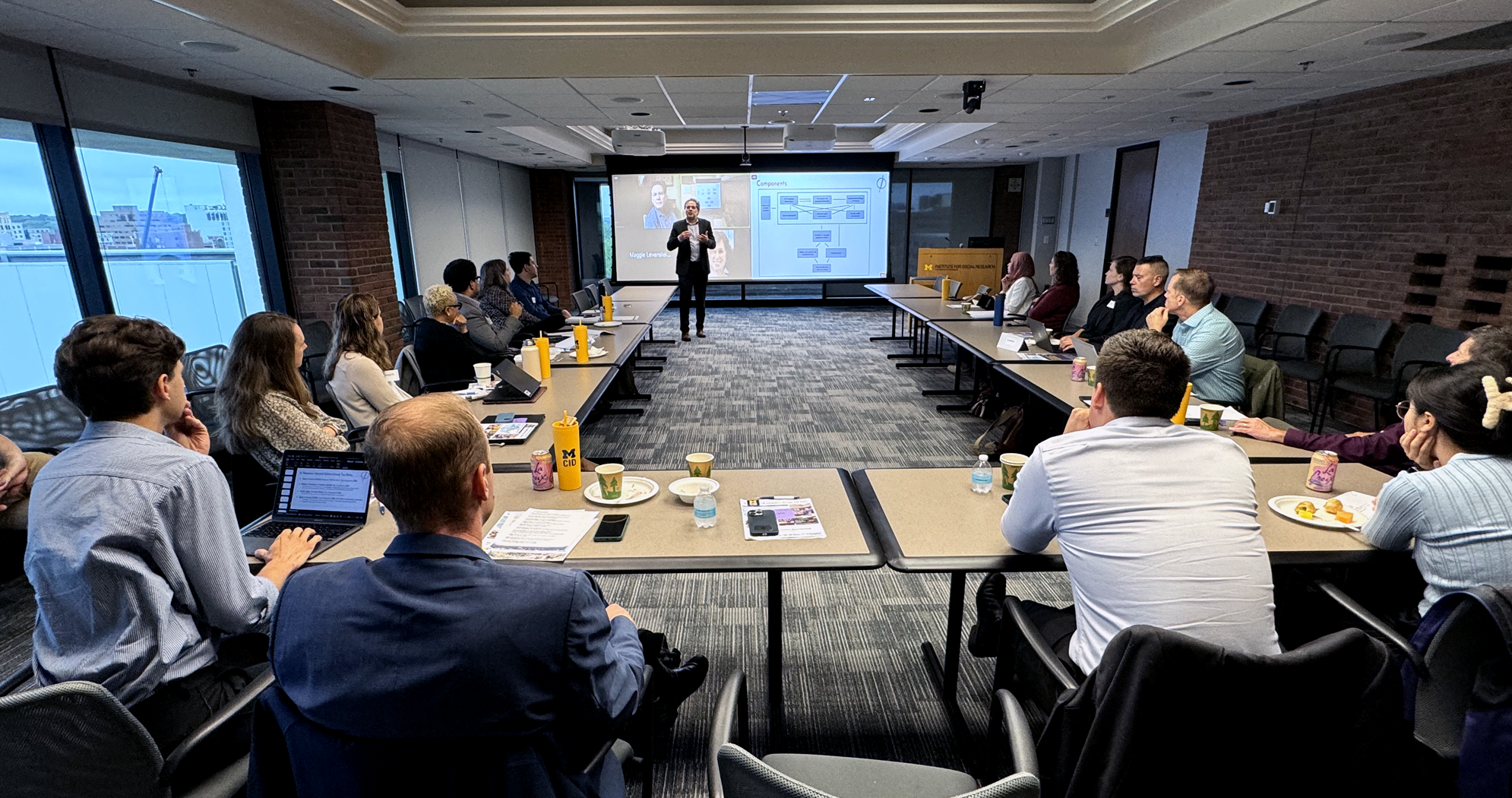
Pablo Mitnik presenting an update on the overall progress of the project at the 2024 WAM Advisory Board Meeting.
About the Wealth and Mobility Study
WAM will analyze the levels, inequality, segregation, and intergenerational mobility of wealth and income across the full U.S. population, in order to answer questions such as:
- How does per-capita wealth vary across the country?
- How do wealth and income disparities differ across states and counties?
- How does residential segregation by wealth compare with segregation by income?
- How strong are the intergenerational correlations in wealth and in income?
- Which U.S. areas exhibit higher and lower rates of intergenerational wealth mobility?
WAM Scientific Advisory Board
Bringing together leading social scientists and thought leaders, WAM Scientific Advisory Board Members serve a two-year term. The Board advises the project team on central scientific and strategic questions. It consists of nine external board members, drawn from multiple disciplines across the country, and three members from the University of Michigan faculty. The Board is chaired by Prof. Alexandra Killewald, University of Michigan.
2024-2026 Board Members
Alexandra Killewald, University of Michigan (Chair)
Deirdre Bloome, Harvard University
Dorothy Brown, Georgetown University
Kerwin Charles, Yale School of Management
Miles Corak, City University of New York
Darrick Hamilton, New School for Social Research
David Kamin, New York University
Maggie Levenstein, University of Michigan
Jonathan Massey, University of Michigan
Kevin Moore, Federal Reserve Board
Stephanie Moulton, the Ohio State University
John Sabelhaus, Urban-Brookings Tax Policy Center
CID Team Members
Pablo Mitnik, Director
Fabian Pfeffer, Co-Director
Joe LaBriola, Co-Investigator
Asher Dvir-Djerassi, Co-Investigator
Carrie Jankowski, Data Scientist
Niva Ranavat, Research Assistant
Melissa Bora, Research Administrator
Nicole Bonomini, Communications Manager
Collaborators
Victoria Bryant, Internal Revenue Service
Tom Hertz, Internal Revenue Service
Robert Manduca, University of Michigan